
september 2026
Food insecurity affects families across the Lakeside region every day, and FoodBank Lakeside continues to respond with consistent, community-driven support. Each month, FoodBank Lakeside provides 597 despensas to families and individuals across nine communities, including San Pedro, Riberas del Pilar/San Antonio Tlayacapan, Chapala, Santa Cruz de la Soledad, San Nicolás de Ibarra, Ajijic, San Juan Tecomatlán, Tlachichilco, and Ojo de Agua.
In partnership with CreSer and El Proyecto, an additional 7,765 meals are provided every month to children, families, and older adults throughout the region.
These numbers represent more than food distribution—they reflect strengthened community partnerships, improved access to nutrition, and
ongoing support for families facing economic hardship. FoodBank Lakeside remains committed to ensuring that no one in our communities has to face hunger alone.
INTRODUCING OUR NEW PARTNERSHIPS INITIATIVEour new team is already producing results!
By kriss gang and hyacinthe miller
FoodBank Lakeside was founded at the beginning of the pandemic in response to the dramatic rise in the number of Lakeside residents unable to adequately feed themselves or their families. We recently celebrated our sixth anniversary of successfully fulfilling our core mission to relieve the chronic food poverty of the most disadvantaged adults and children.
Having stabilized the core programs that fulfill our mission, the Leadership Team decided it was time to deepen our impact in the Lakeside community and explore new working relationships with other businesses, non-profits or institutions that align with our mission, provide different types of support for the individuals we serve, are willing to collaborate, and meet our standards for transparency and accountability.
FoodBank Lakeside has identified five categories of potential partnerships:
- Organizations that help directly in our mission of delivering food to the community
- Organizations that provide the food and supplies we use to prepare despensas and meals
- Organizations that provide services not directly related to food, but that could be useful to our recipients
- Organizations that help us collect donations, provide venues or other services for fundraising events, and/or help with publicity
- Organizations or individuals, particularly grass roots community leaders, that can help us identify and connect to potential partners as outlined above
FBL Leadership Team members Kriss Gang and Hyacinthe Miller volunteered to take on this new initiative to expand the scope of FoodBank Lakeside’s support within the Lakeside community. Kriss and Hyacinthe hit the ground running and have already identified several exciting partnership opportunities. Here are some of the things they are working on:
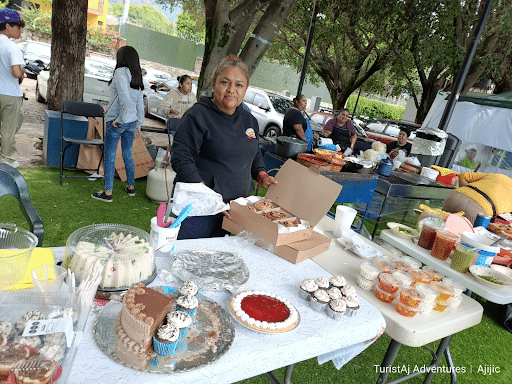
Kermes: These are fundraising events held on the Ajijic Malecon where families facing overwhelming medical expenses can set up a tent and prepare and sell food to the public. All proceeds from each tent help defray the families’ medical expenses. FoodBank Lakeside leadership has agreed to subsidize each family for the costs of their food purchases (up to 2,000 pesos), which organizers say is enough to cover expenses.
Two upcoming Kermes will benefit up to 50 families. The first of these Kermes will be on September 16th starting at 8am, and the second will be held in October (no date yet). This is a tremendous opportunity for FoodBank Lakeside to work more closely with local Mexican communities. We will also provide in-kind support by promoting the events to the broader community.
University of Guadalajara: Partnering with the Ajijic Rotary, we are working with the University to potentially provide meals, at the University’s new Lakeside facility, for the neediest of students who would most likely be forced to drop out due to financial pressures, according to University research into the reasons students withdraw from their studies. Details are being worked out now regarding the logistics. We anticipate starting a test program this fall when classes resume.
In addition to these initiatives, the Partnerships Team will be looking for opportunities to establish connections with organizations that can complement the work of FoodBank Lakeside and fulfill non-food needs (medical, education, health etc.) for those individuals and families that receive despensas or meals through our core services.
This is just the beginning. Watch for information in future newsletters about new partnerships and initiatives fulfilling our mission to relieve chronic food scarcity at Lakeside.
An important final note: this new outreach effort is possible because of our generous and consistent base of donors and volunteers. They are the heart and soul of FoodBank Lakeside.

everyone can give: conversations at the table
By Jeanne Louise RietheR
For most of her career, Robyn Puntch worked in professional fundraising, helping raise support for major institutions like the California Institute of Technology (Caltech), as well as medical and science programs across the country. So when she retired to the shores of Lake Chapala six years ago, she unexpectedly traded boardrooms and multimillion-dollar campaigns for the challenge of helping to build a small, grassroots food bank from the ground up, one conversation at a time.
And grow it has. FoodBank Lakeside began feeding a handful of families and has now provided over 40,000 despensas (large bags of food and hygiene products) to families in need. It has become the major hub of hunger relief for the entire Lakeside community.
“We’re doing this because it’s the right thing to do and we love our neighbors,” Robyn says simply.
At first glance, the Lakeside area looks exactly like what it is known for: an idyllic retirement haven alongside a vibrant working community. But beneath that surface, many local families face real hardship that isn’t always visible. Local government statistics put the poverty rate at close to 40 percent, on par with many other regions of Mexico, and when Covid-19 hit, that number climbed even higher, tipping an already vulnerable community into crisis.
FoodBank Lakeside was launched during that crisis, born out of sheer necessity. It was then that Robyn joined their efforts, seeing genuine hunger up close for the first time. Not in a report or a statistic, but in the faces of families around her. As jobs disappeared, tourism came to a halt, and prices rose; elderly neighbors, children and the most vulnerable in the community increasingly went without. It was deeply unsettling for Robyn to witness, and inspiring to see others doing something about it.
Her fundraising experience was in boardrooms, not food pantries. But the need was real, and she was looking for a way to serve. It turned out to be exactly where she was meant to be.
“I’m a sucker for a worthy cause,” she laughs. “And since they stretch every peso, this seemed to be a place I could help.”
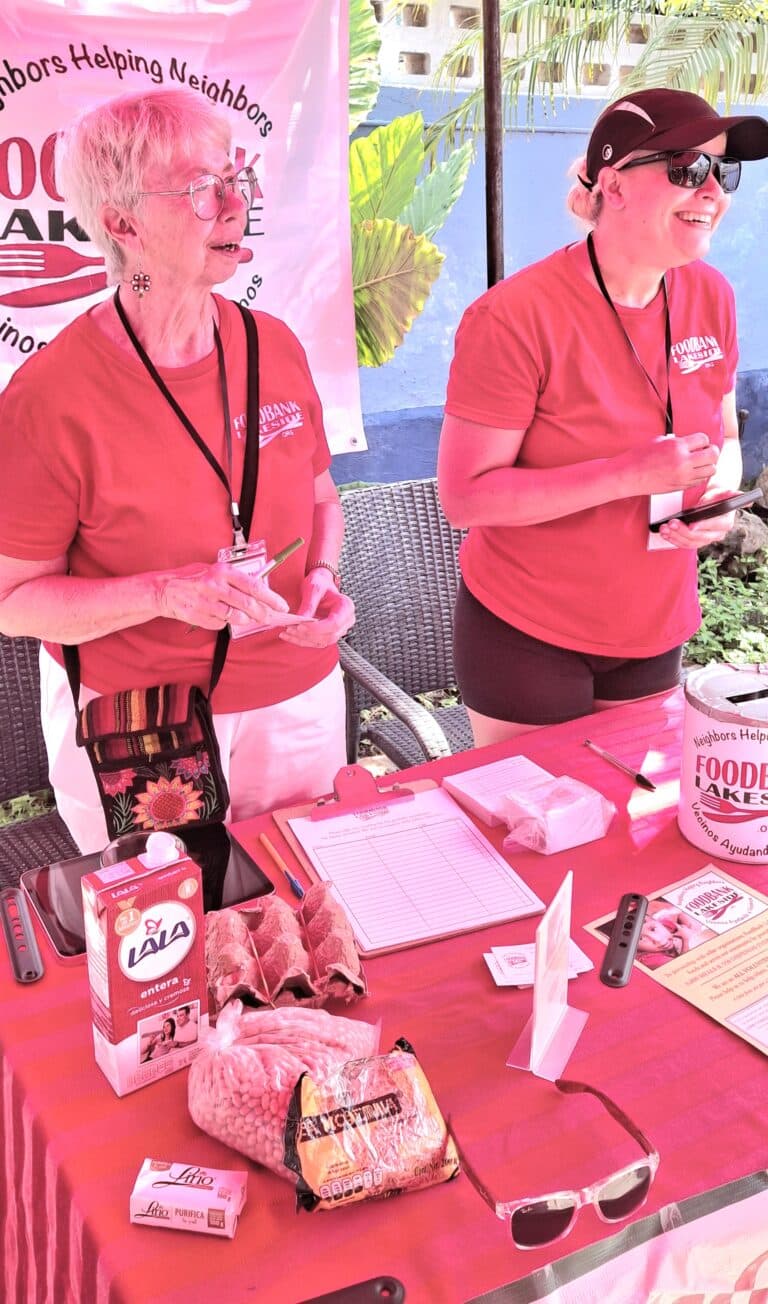
Six years ago, when FoodBank Lakeside first started, few people knew it existed, so one of the very first tasks was simply making the community aware. That’s how the organization’s information tables got their start, popping up at shops and local markets, wherever people already gathered.
“We had to think of ways to increase our members,” Robyn explains. “We started at tiendas and markets in the early days.” As the organization grew and became known throughout the community, the tables moved with it. Today you won’t find them at the weekly market. Instead, they show up at festivals, fairs, and special events around the lake, where crowds gather.
It matters, Robyn says, that people know there are ways to get involved. “We’re in a relationship-building business. Originally we were just a small group of people, and people didn’t really know much about us. We’re always looking for opportunities for people to see what we’re doing and participate. Our work is very much a community effort, and we couldn’t do it with any less.”
These days Robyn serves on the FoodBank Lakeside Leadership Team as fundraising co-chair, helping spread awareness of the organization from the inside. She also delivers food once a week and spends time at the Ajijic Recycling Center, hunting down containers and lids for one of the programs the food bank supports.
The monthly grocery and hygiene packs delivered door-to-door are the most efficient way to reach a large number of people. These deliveries are organized into 11 geographical areas at Lakeside, each managed by a local Mexican volunteer coordinator.
FoodBank also provides funding and volunteer support for two local programs, El Proyecto and CreSer, which provide support to unemployed, disabled, and elderly residents of the area.
Unlike in Robyn’s old career, nobody at FoodBank Lakeside draws a paycheck. Every hour is given freely: by neighbors, for neighbors. And there’s always room for one more.
So the next time you’re at a festival or special event around the lake and spot a FoodBank Lakeside table, stop and say hello. Someone there will be happy to tell you how you can be part of it too, whether that means delivering food, sorting containers, sponsoring meals, or simply spreading the word. As Robyn will tell you herself, this whole organization runs on people showing up. All it takes is one conversation at a table to start.
Want to learn more about volunteering with FoodBank Lakeside? Here’s all you need to know to get started. Because everyone can give, and every act of kindness makes a difference.
from the kitchen...LET'S TALK ABOUT POTATOES!
BY ARLLETE SOLANO
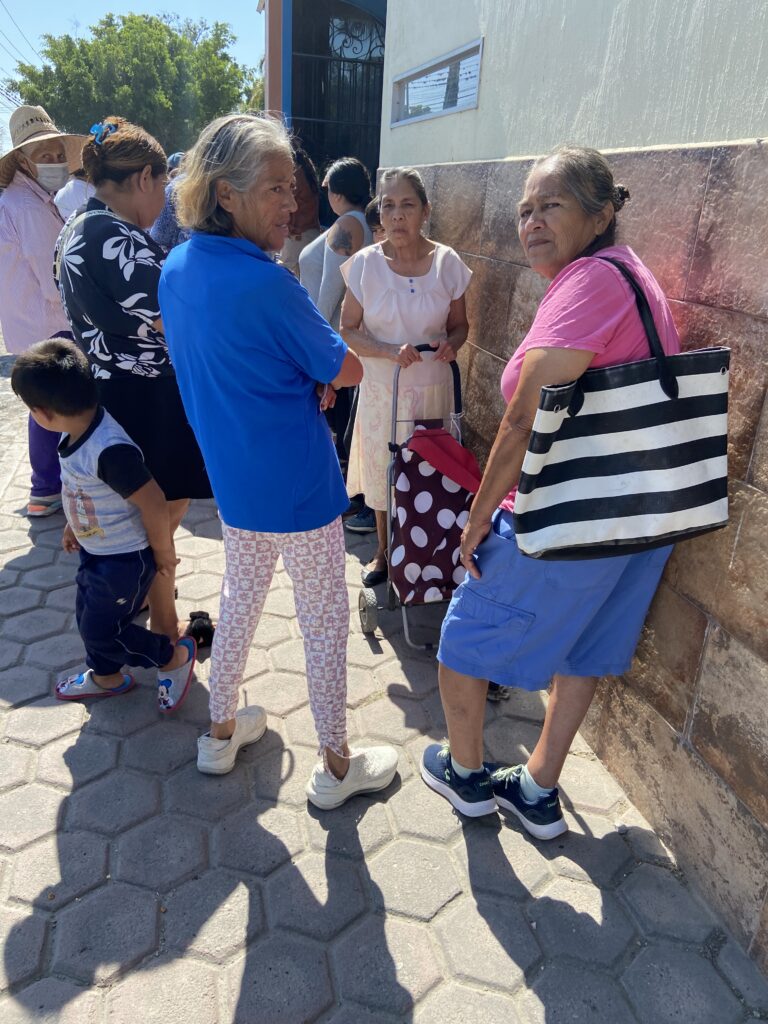
Panchita has eight people to feed at home. The day she stood in line to receive her monthly despensa from FoodBank Lakeside was one the hottest of the season. She and other women were using umbrellas while they waited under the sun that morning. She told me that eggs would be one of the first things to get eaten from the package, so she would add potatoes to make the meal stretch farther.
The potato has been used in this manner for centuries. From the Andes, where indigenous people cultivated it thousands of years ago, the potato traveled across oceans and eventually became a staple in Europe, North America, and much of the world. These edible tubers became indispensable for their extraordinary adaptability: they can produce substantial food on relatively little land and in challenging environments. For these reasons, communities developed ways of dehydrating potatoes to be preserved for years.
Indeed, eggs and potatoes are now familiar everywhere. Folks in the Chapala area have their own recipes, but what’s the trick?
We are talking about lard, a customary ingredient that requires a certain level of skill that Mexican señoras have used for generations. Around Mexican Independence Day on September 16 every year, many of the tastiest dishes are cooked with lard because this distinctive fat adds smoothness and enhances the flavors.
Panchita would not reveal her secret method, so I will share with you a very special family recipe that comes from my Mexican mother, Martha.
Here is a basic recipe to serve 4-6 people:
Ingredients
2 medium size potatoes, diced
5 eggs
2 tbsp lard
1/2 small onion, minced
Making it
- Bring potatoes to a boil in salty water (1 tbs salt, approximately) for 4 minutes. Then drain the potatoes and set them aside.
- Melt lard over medium-low heat in a large pot. Don’t let the lard brown – that is the difference between a sweet flavor and a bitter one.
- Add the potatoes and onion to the pot and stir occasionally over medium heat until golden brown.
- While the potatoes and onions cook, crack the eggs into a bowl and whisk them with a fork.
- Pour the eggs over the potatoes and onions in the skillet, gently stir to combine, and continue cooking until the eggs are no longer runny. But don’t let them dry out.
- Turn off the heat, cover the skillet, and let the mixture rest for a minute before serving.
- Season with salt and black pepper to taste. Enjoy with family and friends!
NEWS AND HAPPENINGS
We did it!
Thank you for helping FoodBank Lakeside meet the $10,000 mid-year funding match. And thank you again to Mike Rogers for his gift in memory of his wife Leslie, and to the anonymous donor. We are grateful for the generous support you provide so that all may be nourished.
St. Andrew’s Anglican Church aids Lakeside households
A grant from St. Andrew’s Anglican Church helped add hygiene products to FoodBank Lakeside despensas.
Common despensa items include rice, beans, oats or lentils, pasta, cooking oil, milk, eggs, and essentials like soap and toilet paper. According to the food bank’s Mexican Local Coordinators who distribute the despensas, the most needed but typically not provided hygiene products are shampoo and toothpaste. While these products are essential, they are not as critical to a household as food.
Thanks in large part to the St. Andrew’s grant, in August FoodBank Lakeside distributed 506 special despensas containing shampoo and toothpaste to households in all 11 of the communities we serve – Ajijic, San Antonio Tlayacapan, Riberas del Pilar, Chapala, Santa Cruz de Soledad, San Nicolás de Ibarra, San Juan Tecomatlán, Tlachichilco, Ojo de Agua, Mezcala, and San Pedro Itzicán.
FoodBank Lakeside thanks the people of St. Andrew’s for making this greatly appreciated benefit possible for vulnerable Lakeside families and individuals.
Join us at the Kermes!
Come enjoy the best Mexican cuisine, music, and entertainment while supporting community members facing medical costs from life-threatening illnesses at the Kermes on the Ajijic malecón on Wednesday, September 16 from 8am until late into the night. We hope to see you there! (For more information, see Partnerships article in this newsletter.)
Where there’s a will there’s a way
September is officially recognized as Will Month (Mes del Testamento) in Mexico.
During September, public notaries (notarios públicos) across the country lower their fees—often by up to 50% or more—and offer extended office hours. In Mexico, a notario público is a state-appointed legal official who holds “public faith” to draft, formalize, and register major legal acts, such as wills.
Foreign residents who own property in Mexico are strongly encouraged to create a local Mexican will, as home-country wills can be complex, costly, and slow to be executed through Mexican probate courts. In your will, please consider leaving a legacy gift to a Mexican nonprofit organization.
To learn more about how to include FoodBank Lakeside in your estate planning, please click here — https://foodbanklakeside.org/legacy-giving/
Volunteer with us!
We are specifically looking for people to help in the following areas, but please visit https://foodbanklakeside.org/volunteer/volunteer-2/ to learn more about volunteering and how to join our team!
Enrolling restaurants and stores in providing donation envelopes for FoodBank Lakeside. Our ongoing Dine & Donate program works with restaurants to encourage cash donations to FBL. We need volunteers to help enroll new restaurants and support their involvement by providing envelopes and table toppers.
We’re also just now starting a similar program — called Shop & Share — with local stores, and we need volunteers to be part of a team to enroll new stores. Both roles will of course involve training so that you’ll be fully prepared and comfortable by the time you talk to stores or restaurants. (Time commitment: 1-2 hours/week. You’ll need your own transportation.)
Writers – Research, conduct interviews, and write a main or co-main article every 2-3 months (500-750 words) including a few photos OR research and write a monthly feature (about 500 words), including a photo or two (Time commitment: 2-5 hours/month)
Outreach/Outside Communications – Coordinate occasional FBL events and FBL tabling at community events. Work with local publications to develop stories about FBL’s events, initiatives, volunteers, etc. (Time commitment: 2-5 hours/month)