
august 2026
Food insecurity affects families across the Lakeside region every day, and FoodBank Lakeside continues to respond with consistent,
community-driven support. Each month, FoodBank Lakeside provides nearly 600 despensas to families and individuals across ten communities: Chapala, Ajijic, San Antonio Tlayacapan, Riberas del Pilar, San Pedro Itzicán, Santa Cruz de la Soledad, San Nicolás de Ibarra, San Juan Tecomatlán, Tlachichilco, and Ojo de Agua.
In partnership with CreSer and El Proyecto, an additional nearly 8,000 meals are provided every month to children, families, and older adults throughout the region.
These numbers represent more than food distribution—they reflect strengthened community partnerships, improved access to nutrition, and ongoing support for families facing economic hardship. FoodBank Lakeside remains committed to ensuring that no one in our communities has to face hunger alone.
Foodbank Lakeside:
The story of a great family
By Arllete Solano
The FoodBank Lakeside story is built from hundreds of experiences of neighbors helping neighbors and from a community that came together in a moment of crisis and never stopped giving.
The COVID-19 pandemic brought challenges to everyone, but it also created unexpected opportunities for people to connect through kindness.
Six years after the global crisis changed our world, FoodBank Lakeside has become one of Lakeside’s most robust and respected volunteer organizations, born in difficult times and still growing through the generosity of the community.
The story began in April 2020.
As the lockdown spread across Mexico, thousands of local workers suddenly lost their income. Waitresses, golf caddies, car washers, domestic workers, and countless others depended on cash-based jobs that disappeared almost overnight. As businesses closed, many families found themselves without enough food.
For FoodBank Lakeside co-founder Patricia Klauer, helping her neighbors felt like the natural thing to do. “Lots of people needed help—elderly people, single mothers, and families who suddenly had no income,” she recalls.
Together with two friends, Patricia quickly realized that the pandemic had not created poverty; it had exposed and intensified the hunger that already existed in many neighborhoods around Lakeside.
To address the uncertainty, fear, and grief that everyone experienced during those months, Patricia and a mixed group of Mexican and international volunteers built a network of support. “We needed people who knew people,” Patricia explains. “So, in every community we found volunteers who knew their neighbors and could help identify families in need.”
Today, that network includes more than 60 active volunteers who distribute food to nearly 600 families every month. Through additional community programs funded by FoodBank Lakeside, nearly 400 children and older adults receive hot meals from Monday through Friday.
“When the economy opened back up, we saw that there were still lots of people who needed help,” Patricia says. “We started because of COVID, but when COVID wasn’t as much of a problem, we realized it had exposed an underlying need that had always been there.”
For Patricia, living in Ajijic has created a special connection with her Mexican neighbors. “They’re always ready to celebrate. They’re open, loving, and generous. They have big hearts. I love Mexican people.” That same spirit is reflected within FoodBank Lakeside itself.
“It feels good because we’re like a family,” Patricia says. “Everyone works together. Nobody has an ego about it. It’s become a very good operation because everyone is a team and cares about what they’re doing.”
As of the summer of 2026, Food Bank Lakeside had delivered more than 40,000 despensas (large bags of food and basic hygiene products) to over 1,000 families. And the work continues.
“We want to be sustainable,” Patricia says. “We’ve recently expanded into three more communities.” That goal is not simply about growth. It is about reaching more families with food, hope, and dignity.
Every donation, every volunteer, and every act of kindness strengthens this remarkable community. Learn about how to become a part of the FoodBank Lakeside family here, and together, we can ensure that no one in our community faces hunger alone.
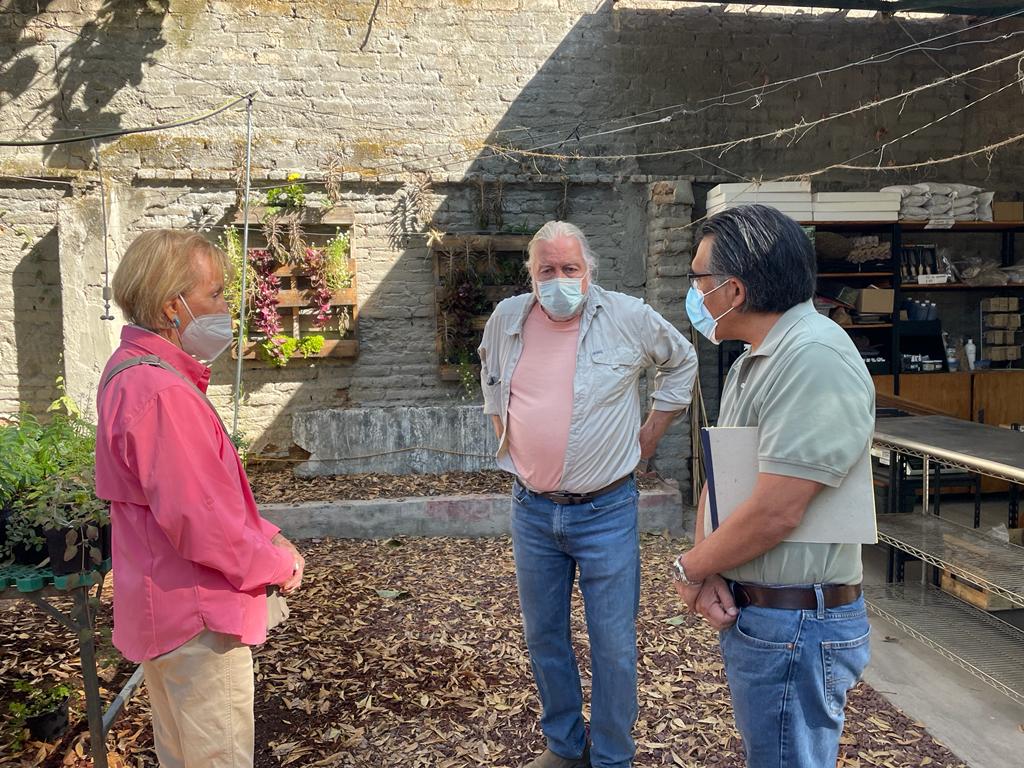
during the early days of the pandemic.
kermes are coming
By Kriss Gang
Hunger and health issues: these are two of the biggest challenges that the most disadvantaged Lakeside residents face. Too many of our neighbors must decide to cut back either on food or on medical necessities. Reducing food intake is usually the first choice. Most medical expenses for the poorest Lakeside residents are diabetes-related issues, kidney disease, and cancer, which leaves them to face daunting costs for hospital bills, drugs, surgeries, dialysis, and chemotherapy. Unfortunately, it is easier to go without food than to bypass lifesaving medical help.
COVID only made a bad situation worse. However, out of the shadow of the pandemic came one very unique and community-building way to help individuals and families ease some of the financial burden they face: Kermes.
What is Kermes?
The word Kermes comes from Middle Dutch meaning “Church Mass” and originally referred to celebrations of a church’s anniversary. Over time Kermes evolved to be an outdoor neighborhood fair or a charity bazaar featuring food, music and games. In Spanish the word Kermes translates to a charity fair, community bazaar or church festival.
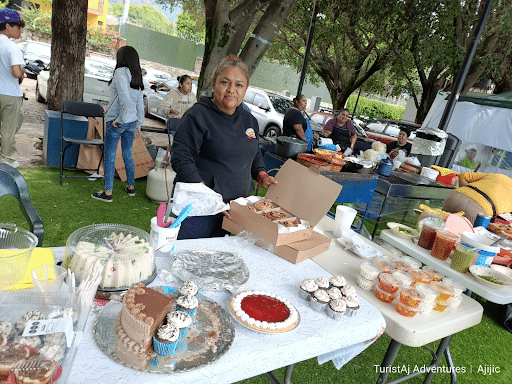
Locally, Kermes are community-organized events primarily focused on fundraising for medical expenses. Local families facing overwhelming medical costs apply or are invited to participate. Lakeside, Kermes events are usually held around the Ajijic Malecon or sometimes on central plazas. A Kermes may be a small affair to raise money for one or two families or a big event for 25 to 30 families.
How it works
For large Kermes events families select or are assigned food(s) to purchase and prepare. Because participating families have limited resources, prior to the day of the Kermes, they solicit funds and donations from neighbors, family and friends. On the day of the event, they set up a tent and whatever items they need to prepare and sell food to the public. They keep all proceeds to help offset medical expenses.
If you have never been to a Kermes – and most expats or immigrants have not – you must check one out. They are truly a celebration – of community, Mexican cuisine, and music. You will find everything from tacos to pozole plus traditional drinks, pastries, and desserts.
Enter FoodBank Lakeside
As part of its new Partnership initiative, FoodBank Lakeside Leadership Team has agreed to provide financial support for two upcoming Kermes by subsidizing each family for the costs of their food and product purchases (up to 2,000 pesos), which organizers say is enough to cover their costs. This will help families in two ways. First, they will not have to go to neighbors, family or friends to solicit donations, saving time and possibly dignity. Second, it will increase what they make from their participation in the event.
Two big Kermes are coming in September and October
Two upcoming Kermes hosted by two local charity groups will benefit up to 50 families. The first of these Kermes will be on September 16th and the second one will be held in October (no date yet.)
Tu Ayuda Hace La Diferencia (Your Help Makes The Difference)
Tu Ayuda Hace La Diferencia is a non-profit charity organized to help Lakeside residents with limited to no financial resources cover major medical expenses. The organization focuses on 25- 30 individuals. They host two Kermes annually, one during Carnival, and one on the 16th of September (Mexican Independence Day).
The organization was founded nine years ago by Jose Leja. After organizing his own Kermes to help with costs to treat his daughter’s life-threatening illness, others with sick family members began approaching Jose to help organize Kermes for them. Within a year Tu Ayuda Hace La Deferencia was formed. The organization has helped hundreds of individuals with their medical expenses by hosting Kermes, fundraising raffles, and soliciting donations for medical costs. Jose and a small group of volunteers work tirelessly year-round to help their people.
Check out their Facebook page, which highlights the individuals they will be supporting with the proceeds from the Kermes on September 16th.
Manos Solidarias (Helping Hands)
Led by community advocate Berenice Ramos Zamora, this grassroots collective was founded more than six years ago to ensure that no family has to face the crushing burden of medical expenses alone. Rather than relying on traditional charity models, the collective organizes vibrant local events: from traditional raffles to lively community Kermes.
Crucially, patients and their families are invited to actively participate by preparing and selling food, managing ticket sales, or running event booths. The funds raised are then directly distributed among the participating families. It is a system built on dignity, active involvement, and genuine community solidarity. While rooted in Ajijic, the collective’s reach extends throughout the Ribera region, offering a strong safety net of care through deep community connections.
Manos Solidarias stands as a testament to the spirit of the Lake Chapala area—a place where neighbors show up for neighbors, turning shared effort into life-saving support. Check out their Facebook page.
Both of these organizations provide vital support to the most vulnerable in our Lakeside community, each with a different approach but the same result, helping families stricken with health and medical expenses beyond their financial ability to handle. The Kermes bring together family, neighbors, and community. Unfortunately, the majority of the expat/immigrant community is unaware of these vital local “safety nets.” Please make it a priority to come to one of these two events on the Ajijic Malecon this September and October and show your support. You are certain to enjoy the best Mexican cuisine, music, entertainment; and a festive atmosphere that will warm your heart and bring relief to many individuals and families. Hope to see you there!

what's cooking ...
by Susanne Bjorner
Mexican Lentil Soup
Lentils are a frequent item in the FoodBank Lakeside despensa, for good reasons. Lentils are a good source of protein, fiber, magnesium, and vitamins C and B. On their own, lentils can be the basis for a hearty plant-based meal. They also blend well with a wide range of spices and herbs, and can be supplemented with small amounts of animal protein sources for variety.
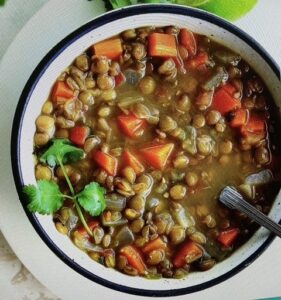
Lentils—lentejas in Spanish—are the fastest cooking legume. Unlike most legumes, they do not require pre-soaking, and they can be boiled to tenderness in 20 to 45 minutes. Lentils come in six colors: in addition to the brown and green lentils with which you are probably most familiar, you can find black, yellow, orange and red.
Red lentils cook fastest, but tend to get mushy; the green ones take longer to cook but hold their shape very well, and consequently are good for salads. Brown lentils cook faster than green but also get somewhat mushy and are perfect for stews and soups.
Brown lentils are fine for this classic Mexican Lentil Soup.
Here is a basic recipe to serve 6:
- 2 Tbsp olive oil
- 1 1/2 cups chopped onion (1 medium)
- 1 1/2 cups chopped yellow bell pepper (1 medium)
- 1 1/4 cups peeled and diced carrots (2 medium)
- 1 jalapeño, seeds discarded, chopped (optional)
- 1 1/2 Tbsp minced garlic (4 cloves)
- 7 cups low-sodium vegetable broth, then more as desired
- 2 (14.5 oz) cans fire roasted tomatoes
- 1 1/4 cups brown lentils, rinsed and picked over
- 1 Tbsp ancho chili powder
- 2 tsp ground cumin
- 1/2 tsp ground coriander
- Salt and freshly ground black pepper
- 1/2 cup chopped cilantro
- 1 Tbsp fresh lime juice
Making it:
- Heat olive oil in a large pot over medium-high heat. Add in onion, bell pepper, carrots and jalapeño and sauté 2 minutes.
- Add garlic and sauté 2 minutes longer. Stir in broth, tomatoes, lentils, chili powder, cumin, and coriander and season with salt and pepper to taste.
- Bring mixture to a boil then reduce heat to low and simmer, stirring just a few times throughout cooking, until lentils are tender, about 45 minutes.
- Stir in cilantro and lime juice. Serve warm topping each serving with tortilla strips, avocados and cheese.
For serving:
- 2 cups tortilla strips or crumbled tortilla chips
- 2 avocados, diced
- 1/2 cup crumbled cotija or Mexican blend shredded cheese
The illustration and a version of this recipe for Mexican Lentil Soup is available at https://www.muydelish.com/lentil-soup/.
As delicious as this is, don’t limit your lentil repertoire to soup. You can also add lentils to salads, use them in stew, and make a meatless shepherd’s pie.
Partnering with El Proyecto de los Niños
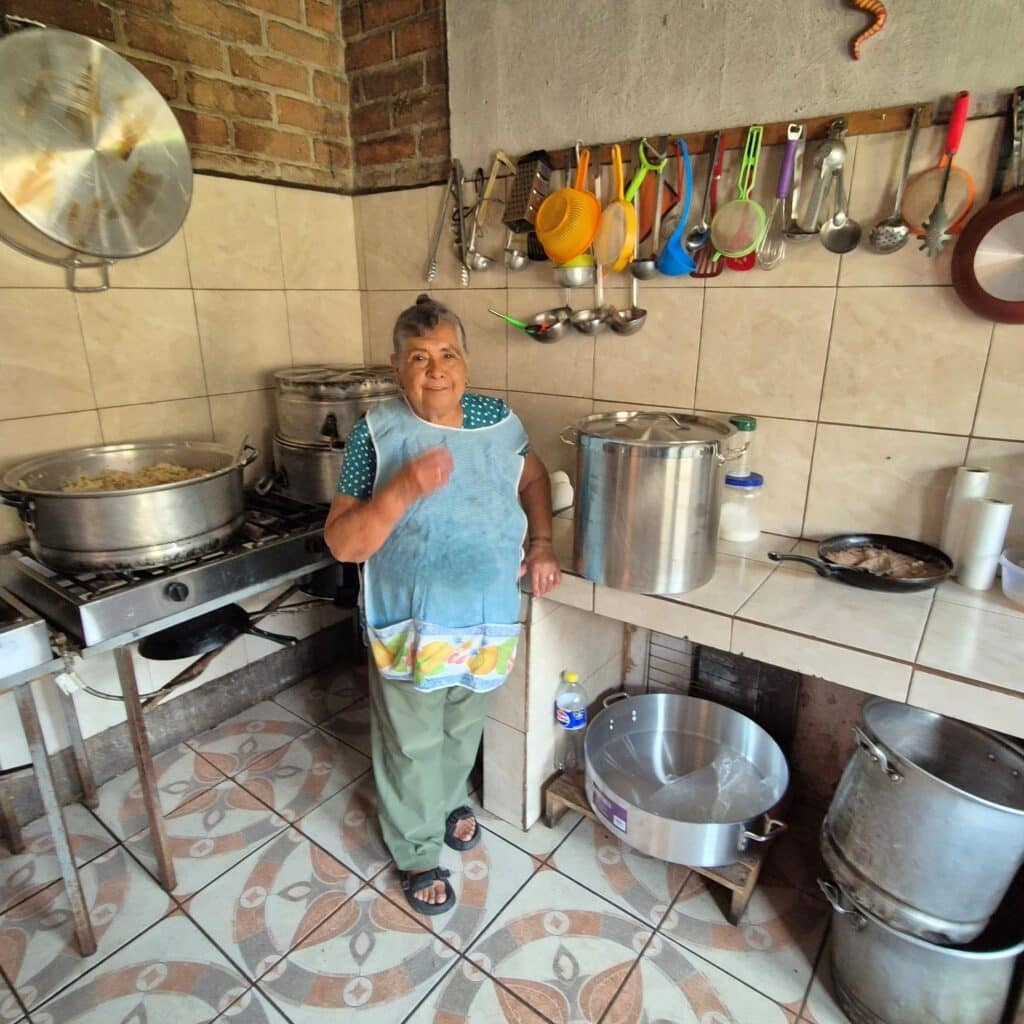
Partnering with El Proyecto de los Niños, FoodBank Lakeside provides financial resources and volunteer drivers to deliver hot food Monday through Friday in Ajijic. The food is prepared in San Antonio at the El Proyecto de los Niños Community Center. Recently, Maria – the amazing woman in charge of the kitchen and all food prep – notified FoodBank Lakeside that they desperately need new “commercial” cooking pots.
Leadership Team members from FoodBank Lakeside volunteered to help secure the much-needed new cookware. It turned out that new pots were going to cost a lot more than anticipated. El Proyecto had no budget for such an expense, so they turned to FoodBank Lakeside’s daily volunteer drivers for a one-time donation to pay for the new commercial pots. Within two weeks Maria and her team had their new pots.
Thank you, volunteers, for your generous contributions!