
July 2026
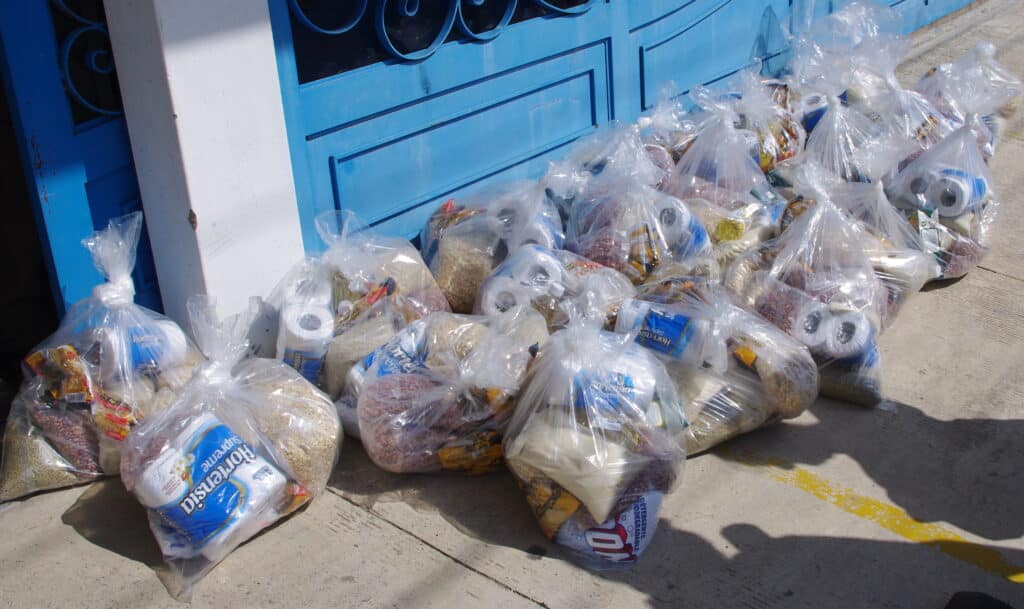
Food insecurity affects families across the Lakeside region every day, and FoodBank Lakeside continues to respond with consistent,
community-driven support. Each month, FoodBank Lakeside provides nearly 600 despensas to families and individuals across nine communities, including San Pedro, Riberas del Pilar/San Antonio Tlayacapan, Chapala, Santa Cruz de la Soledad, San Nicolás de Ibarra, Ajijic, San Juan Tecomatlán, Tlachichilco, and Ojo de Agua.
In partnership with CreSer and El Proyecto, an additional nearly 8,000 meals are provided every month to children, families, and older adults throughout the region.
These numbers represent more than food distribution—they reflect strengthened community partnerships, improved access to nutrition, and ongoing support for families facing economic hardship. FoodBank Lakeside remains committed to ensuring that no one in our communities has to face hunger alone.
six years and counting
By Alison Tepsic
What’s our process for providing assistance to our community members through our despensa program?
It would be impossible to reach the neighbors we do without the invaluable household assessments completed by our Mexican Local Coordinators. Because our resources are limited, we have established eligibility criteria to try to ensure that our support reaches the most vulnerable families and individuals.
We prioritize those with the greatest and most immediate needs, but do everything we can to help everyone we can with our available resources. Employment of one or more family members is considered but not determinative. All factors, including children, elderly, and disabled family members are taken into account.
With your help, over the past six years we have been able to grow our organization so that now we’re able to provide nearly 600 despensas monthly to recipients across nine communities lakeside. Through our partnerships with amazing local organizations like CreSer and El Proyecto, we’re able to provide an additional nearly 8,000 meals every month throughout the region.
We care deeply about food insecurity in our communities. We’re so very proud of what we’ve been able to accomplish in the past six years, and look forward to what we’ll be able to accomplish in the future. Many thanks, deeply and sincerely, from all of us at FoodBank Lakeside for all that you do to help.

everyone can give
A Table with Room for Everyone
By Jeanne Louise Riether
—Anthony Bourdain
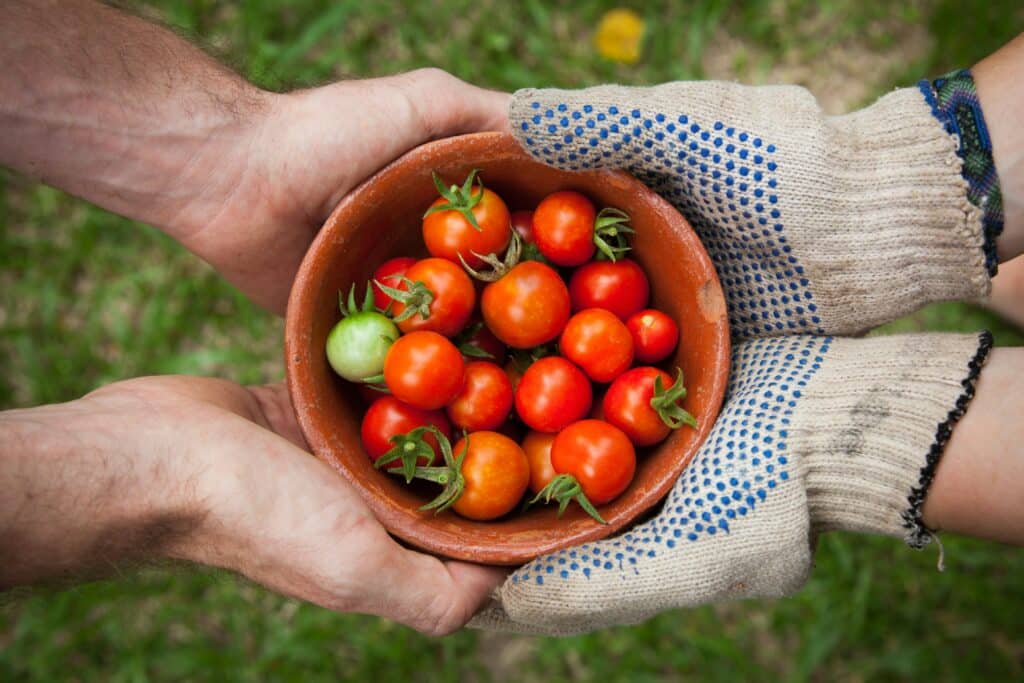
Food may be humanity’s oldest invitation. Worldwide, celebrations ranging from birthdays and weddings to religious holidays and community festivals center around sharing a meal. Nearly every culture holds traditions of feeding guests, and offering food has long been considered a moral responsibility — and, in many traditions, a sacred trust. Anthropologists believe that sharing food predates civilization itself. Long before governments formed or written language emerged, our ancestors gathered around campfires and shared what they had: gestures of trust, welcome, and belonging.
Why do we do it? Why not simply keep valuable resources for ourselves? Positive psychology offers an intriguing answer. Acts of generosity — what psychologists call prosocial behaviors — benefit not only the person receiving kindness but also the one offering it. Research shows that people who prepare food for others experience greater happiness, vitality, self-esteem, and a stronger sense of purpose. When we offer food, we do more than nourish a hungry body — we strengthen human connection, feed the spirit, and often leave ourselves feeling enriched.
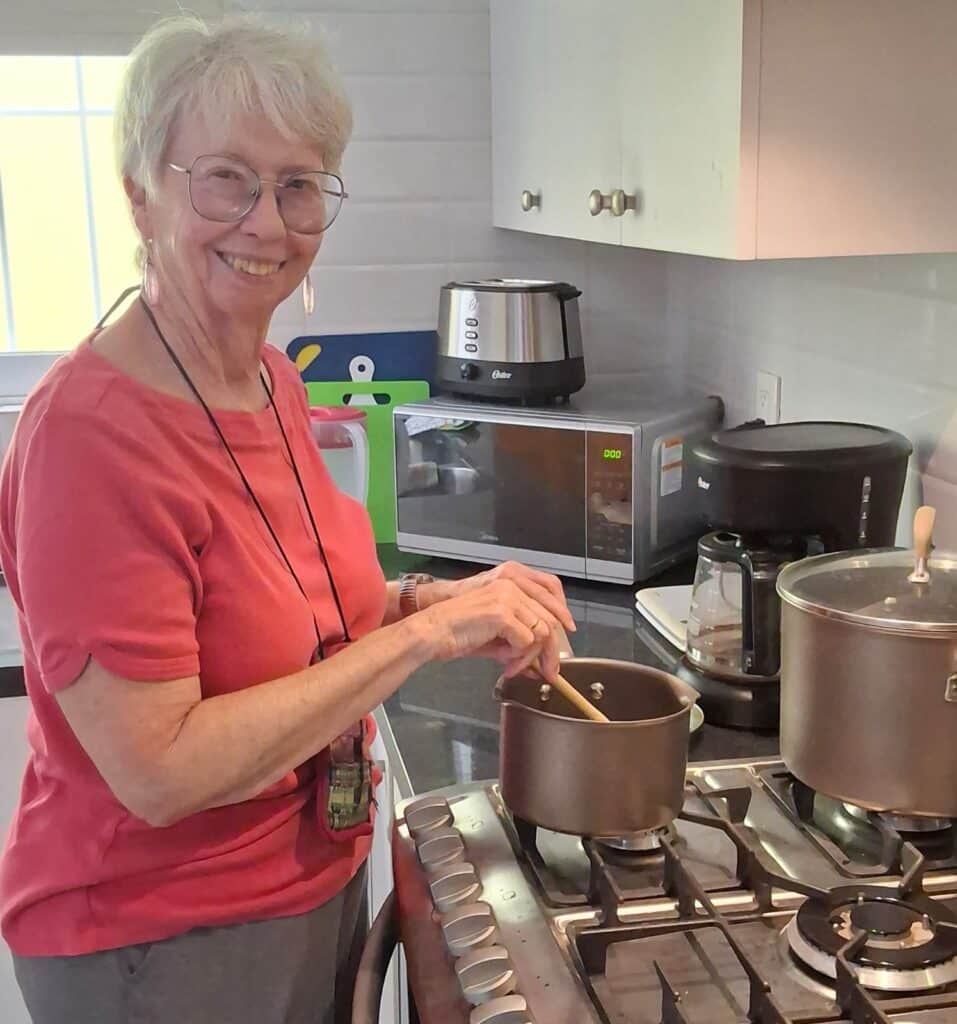
Susanne Bjorner (who wrote our “What’s Cooking” feature below) knows this feeling well. A volunteer at FoodBank Lakeside, she grew up in a family where sharing food was simply part of life. “Food was what you used to bring people together,” she says.
So when she first heard a FoodBank Lakeside speaker at the Unitarian Church describe the need for volunteers, she felt an immediate pull to help. There was only one complication: Susanne has worsening vision loss. She doesn’t drive, and she worried about whether she could participate meaningfully. “I realized I have real limitations with my vision,” she says. “I would need to find out what I could do efficiently and effectively, without ending up being a bother.”
She needn’t have worried. Susanne connected with volunteer coordinators who encouraged her to explore different roles rather than rule herself out. “That’s the strength of their system,” she explains. “They help people find what they want to do.” She enjoyed staffing information tables at community events for FoodBank Lakeside, then was encouraged to contribute to the newsletter…and that’s where something clicked.
It made perfect sense. In her travels abroad, Susanne had always made a point of visiting local grocery stores. “I want to see how people work with the foods available to them and compare it to home,” she says. Combined with a background in technical writing, she was well-prepared when the opportunity arose at a volunteer meeting. “When it came up that a food editor was needed for the newsletter, I jumped at it! Now, I’m ecstatic writing about food.”
Her husband Johannes, originally from Denmark, is not at all surprised. “I’ve known Susanne for 59 years, and she was always feeding others and learning to cook local foods” — Brazilian, South African, Danish, Spanish. Writing about food for the FoodBank, he says, is a natural progression.
Food banks provide more than food; they provide connection. Receiving food in a welcoming environment restores dignity and reduces isolation. To invite someone to share is to say, without words: You are welcome here. You belong. At FoodBank Lakeside, the table has room for everyone. Volunteers like Susanne show us that there is a place here for you, too — whatever you have to offer.
Interested in volunteering or donating? Come find your own niche at FoodBank Lakeside.
what's cooking ...
by Susanne Bjorner
Arroz Blanco – Basic Rice
We were served Frijoles negros de Olla con Arroz by the wonderful Mexican cooks at our community dinner last week. It was delicious—black beans in a thickened sauce, spooned over rice, accompanied by roasted carrots and slices of cucumber, avocado, and radish.

It gave me the opportunity to ask why the rice I get in Mexico is so often white rice, rather than the sturdier brown rice or the reddish, spiced rice that I have always thought of as “Mexican rice.”
It’s because rice often serves as a mild, neutral base to offset the spicy, intense flavors of so many Mexican main dishes. White rice (arroz blanco) soaks up the sauces of stews and moles, and helps clean the palate for another bite.
But there are regional variations: It’s the northern states that favor the red “Mexican rice,” cooked with tomato or achiote, while the southern areas of Mexico, as well as Jalisco, generally use arroz blanco.
But it has to be prepared properly! Each grain of the white rice has to be toasted on a pan in oil, before adding the boiling liquid that puffs it up.
Here is a basic recipe to serve 4-6:
- 1 cup long-grain white rice
- 2 cups warm chicken broth (or water)
- 2 Tbsp vegetable oil (avocado, canola, olive)
- ¼ medium white onion
- 1-2 large garlic cloves
- 1 whole (not cut) jalapeño or serrano pepper (optional, for aroma)
- 1 tsp salt (adjust if using salted broth)
- ½ lime, juiced
Making it:
- Blend the onion, garlic, and ¼ cup of the broth until completely smooth. Set aside.
- Heat oil in a heavy-bottomed pot over medium heat. Add the dry rice and sauté for 3-5 minutes, stirring constantly. Do not let it brown.
- Pour in the blended onion and garlic mixture. Stir constantly for 2 to 3 minutes until the liquid evaporates and the onion and garlic give off their aroma.
- Pour in the remaining broth, lime juice, additional salt if needed, and the whole pepper (do not cut it). Bring to a boil.
- Cover with a tight-fitting lid, turn heat to lowest setting, and cook for 15-18 minutes. Do not open the lid. It is really helpful to have a glass lid so you can monitor progress, especially in our high altitude.
- Turn off the heat and let the pot sit, covered, for 10 minutes. Remove the lid, discard the pepper, and fluff gently with a fork before serving.
Now you have one of the two basic parts of the myriad of black beans-and-rice dishes throughout the world. In addition to Mexico’s Frijoles Negros con Arroz, take a look at Spain’s Moros y Cristianos, and Costa Rica’s Gallo Pinto. Buen provecho!