
March 2026 newsletter
Door-to-door Happiness Delivery: Faces of the People We Serve
by Arllete Solano, Marketing Team Member
Every door we visited was already open. People were waiting for us–not only for food, but for connection. Today, I don´t want to make you cry with images of hunger or sadness. I want to inspire you with something brighter. Because when you meet someone who is tired, sick, or poor, your first impulse is to share what you have, as a candle that lights inside of you.
Helping others is not about sadness and suffering. At least at the neighborhoods around Chapala, it is more about smiling, and shaking hands and patting heads. FoodBank Lakeside is a nonprofit association of Mexican and ex-pats working together in a loving project than includes food delivery door-to-door in charming neighborhoods up there, close to the mountains.
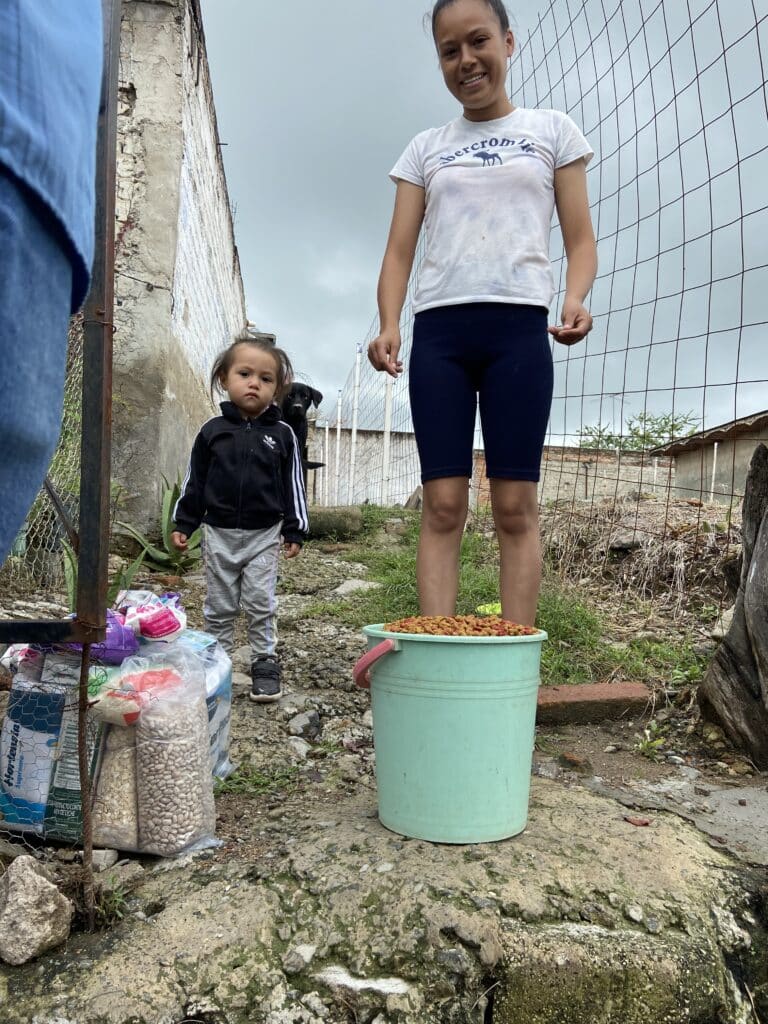
What you don’t see are dirty kids running barefoot around a dusty playground. There aren’t sick, skinny dogs lying on the road or in puddles. Here is a quiet place, with some facades in very Mexican lovely styles hand painted. The people we meet show grateful smiles and hope behind their gazes.
Since we were delivering at the end of rainy season, our shoes brought lots of mud to Karen and Steve´s car. They gave me a list with the names of the families we´ll be visiting this rainy morning. The document included the number of kids, dogs and cats because their pets will receive food too. The despensa is a package that contains rice, beans, pasta, oats, cooking oil, milk, and more in a plastic bag beside the laundry detergent, toilet paper, soap, and a box of eggs.
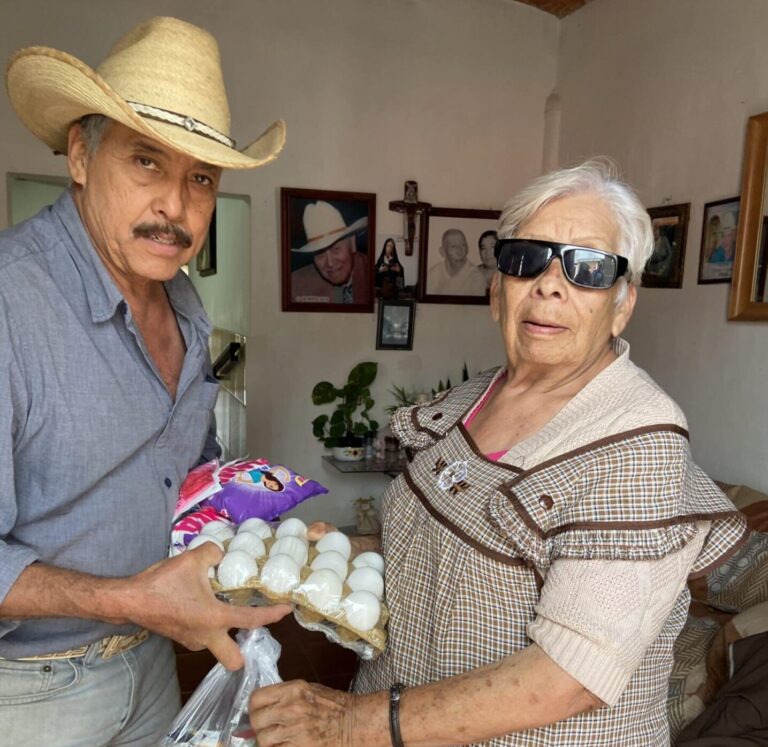
Although Elena is almost blind, she can see her little cachito excited because the FoodBank Lakeside people were at her home. She was sitting next to the door waiting for them, I mean, us, and she of course blessed the group in the name of God. This happens every five weeks when Javier, the community coordinator and the American couple deliver not only food but love in these remote communities along the Ribera.
Jada owns one cat and three little doggies. Not only them but a gang or playful dogs came to greet us outside elderly blind woman’s house. Street dogs all know that Karen hides galletas in Steve’s T-shirt pocket. At the same serene village of Santa Cruz de la Soledad, the fragrance of a rosemary garden led us in to Maria’s yellow and white square tiled porch floor. She was sitting in her wheelchair with a huge smile, and blessed us too.
Her grandson is in his last year of college. He studies sociology, the psychology version for cities. Five years ago, he started school with a fancy new computer the association gave him. We keep moving a few miles ahead toward Eduardo´s gate where he and his pets were waiting for us to fill up the empty cat food bucket. He lost his leg but he is still mobile. He points toward his stomach to confirm that the pain he has under the right rib is still there. It might be due to a gallbladder deficiency, he said, explaining with the same smiling face, though.
Paola´s daughter has a boiling pot full of beans on the stove by the time we come in. She must wake her mother up, otherwise she´d scold her for not giving her the chance to greet us. Paola is nearing 90 and loves to socialize. She offered a hug and a warm gaze in our faces to show how grateful she was. Her skin and eyes reveal the marks of her 90 years lived and much tiredness. During the tour with Karen and Steve, I was discovering that adults may be blind, elderly or disabled, but they still feel dignity and joy when receiving not only beans, but caring greetings.
Now, her granddaughters are in college. Because her son-in-law takes care of them in Guadalajara, her own daughter can look after Paola because they don´t have enough money to pay for a helper, they said laughing.
At his home on Calle Allende, Nicolás had no supper yesterday. Today, this Egyptian Mao kitty cat can’t wait before sinking his tiny snout in the kibbles. Erika, the kitten owner, also receives the package with an enormous and loud toothless laugh.
To finish the happiness door-to-door journey, a nameless dog releases a swing dance festival of love and happiness. His house is not on the list but the property in front of his is and he, like the rest of street dogs that come from everywhere, receives a bunch of tasty cookies from Karen´s generous hand.
(recipient names have been changed to respect confidentiality)

At the end of the day, a despensa or bag of food feeds not only the stomach but the soul as well. Knowing that someone cares about you and that you are not alone, cheers the soul. Spirits are calmed with warm, homemade food shared with the family.
This is not just about food. This is respect, care and comfort delivered door to door.

Javier Carranza—A Quiet Hero Serving Santa Cruz
by Jerri Mannion, Volunteer Management Team Member
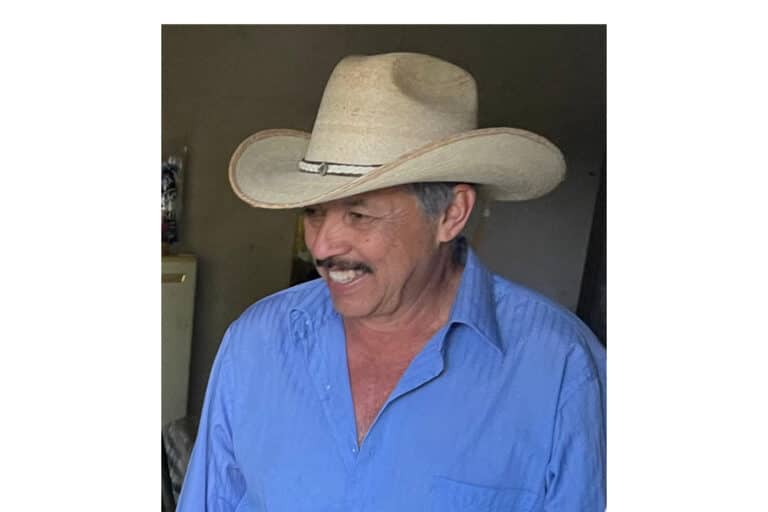
In the small community of Santa Cruz, just east of Chapala, Javier Carranza is a man known simply by his last name. For 45 years he has lived among his neighbors, building a life rooted in family, hard work, and service. Today, he is known not only as a longtime resident, but as a compassionate volunteer who helps ensure that families in need do not go hungry.
Javier has been volunteering with FoodBank Lakeside since the early days of the pandemic in 2020-right when FoodBank Lakeside started-when widespread job loss created a severe food shortage throughout the region. Introduced to the organization by FoodBank Lakeside co-founder Paola DeWatterlot, he joined an effort to deliver food to families who suddenly found themselves without income or support. More than five years later, he continues this work with quiet dedication.
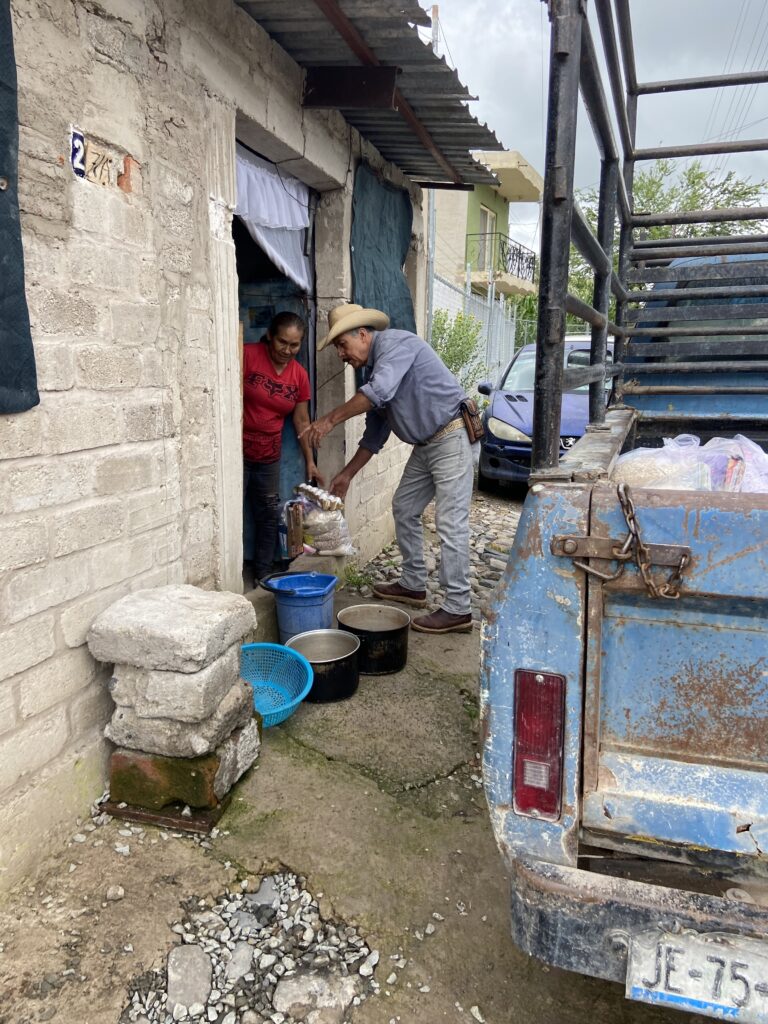
As FoodBank’s Local Coordinator for Santa Cruz, Javier identifies families in need — single mothers, children, elderly residents, and others living with little or no income. Because neighbors know and trust him, they often alert him when someone is struggling. These names are compiled into a list so that monthly despensas — bags of essential food staples — can be delivered to those who need them most. With the help of FoodBank’s volunteer drivers, Javier now helps deliver food to more than 80 families in his area.
His own life has required sacrifice. For the past several years Javier has been caring for his wife through a long illness. Once a farm worker and skilled handyman with a small workshop at home, he now stays close to home to care for her, dedicating most of his time to her needs while continuing his volunteer service.
When asked what he values most about his work, Javier answered simply: “The chance to help others without receiving anything in return.”
“It is a beautiful experience,” he said, expressing gratitude for the friendly and supportive people he serves alongside.
The work is not always easy. Occasionally, when a family’s circumstances improve and food assistance must be redirected to others in greater need, some respond with disappointment or resentment. Yet Javier remains focused on the purpose behind his efforts.
He has witnessed firsthand the impact FoodBank Lakeside has had on the community — children who no longer go hungry, mothers who no longer have to beg on the streets for food money, and families experiencing greater stability and health. He is especially passionate about making sure people understand that this support comes largely from the expat community — volunteers and donors from Canada and the United States who fund and organize the program.
Looking toward the future, Javier’s hope is simple and heartfelt: that the program will continue long after he is gone, remaining a lifeline for those in need.
Reflecting on the early days of the pandemic, he recalls how families waited for government assistance that never came. Instead, FoodBank Lakeside emerged to fill the gap, funded largely by generous donations that allowed food to be purchased and distributed free of charge across many communities.
Because of his wife’s illness and his caregiving responsibilities, Javier has not been able to attend many gatherings or reunions with fellow volunteers, something he wishes he could do more often. Still, his quiet presence and steady commitment continue to make a profound difference in Santa Cruz.
Through compassion, humility, and perseverance, Javier Carranza embodies the spirit of service that sustains FoodBank Lakeside — neighbors helping neighbors, one family at a time.
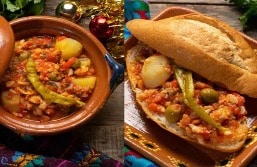
Bacalao (dried salted cod) a la Vizcaina
A traditional Mexican New Year’s meal closely tied to history is Bacalao a la Vizcaína, often served on New Year’s Eve or New Year’s Day, especially in central Mexico.
Bacalao a la Vizcaína is made from salted cod that has been soaked in fresh water to remove excess salt, then slowly cooked with tomatoes, olive oil, garlic and onions, capers, olives and sometimes chilis, almonds or potatoes. It is often served with bouillon or crusty bread and accompanied by cider or wine.
The dish has Spanish origins, tracing back to the Basque region (Vizcaya) of northern Spain. Salt cod was a staple food because it could be preserved for long sea voyages and during periods when fresh meat was unavailable. When the Spanish colonized Mexico in the 16th century, they brought along their Catholic traditions, Mediterranean ingredients and preserved foods (like salted cod). Over time, Mexicans adapted the dish using local flavors and ingredients, creating a distinctly Mexican version of the original recipe.
Because of the Catholic influence, Bacalao became associated with important religious and celebratory dates, including Christmas and New Year, when meat was traditionally avoided or limited. Bacalao was once expensive and labor-intensive to prepare so it became a celebration dish, symbolizing abundance and gratitude. It’s often prepared in large quantities, improving in flavor over several days, making it perfect for extended family gatherings around the New Year. Today Bacalao has great cultural significance. It represents a bridge between the old and new world, strong respect for tradition and hope for prosperity in the coming year. And because many families pass down their own bacalao recipes, making it has become as much a heritage dish as a festive one.
Prep time: 15 minutes Cook time: 45 minutes Additional time: 4 hours Total time: 5 hours
Ingredients
• 1 lb boneless salted cod
• 1 lb petite potatoes, sliced
• 3 garlic cloves
• 1 medium onion, finely sliced
• 1/2 cup canned roasted red bell peppers (pimentos), drained and cut into strips
• 1/4 cup pitted green olives
• 1 tablespoon capers
• 1 tablespoon minced fresh oregano
• 6 oz tomato sauce
• 1/2 teaspoon paprika
• 1/4 teaspoon cumin
• 1/2 cup white wine
• 1/2 cup water
• 1/2 cup olive oil, divided
• 1 bay leaf
Instructions
1. Soak salted codfish in about 2 quarts of water, changing the water three times over the course of 8 hours. Drain and check for bones.
2. Add bacalao to a large pot and cover with water. Cover and bring to a boil over medium heat.
3. Put the lid askew and lower heat to a simmer. Cook for 15 minutes or until tender.
4. Drain the bacalao and cool. Using a fork flake the bacalao into bite-size pieces.
5. Drizzle 1 tablespoon of olive oil in a large skillet and heat over medium-high heat.
6. Layer half of the potatoes, cod, garlic, onion, pimentos, olives, capers, oregano, sauce, paprika, cumin, and 1/4 cup olive oil. Repeat layering with remaining ingredients, ending with bacalao.
7. Pour in remaining olive oil, white wine, and water. Shake the skillet to distribute and tuck in bay leaf.
8. Bring to a boil, lower to a simmer and cover. Cook for 30 mins or until potatoes are tender. Keep the heat low or the bacalao will toughen up.
9. Serve alone or with crusty bread, white rice or sautéed sweet plantains.