
We are blessed to be living in the paradise that is the Lakeside community.
Many of us appreciate the quality and diversity of restaurants here. Dining out definitely is a favorite pastime here. Personal enjoyment aside, the multitude of restaurants is also an important part of the local economy providing hundreds of jobs for local residents.
The simple act of “dining out” whether solo, with a loved one or with friends is an important way to support the lakeside economy. And this is important because below the surface and mostly out of sight is the problem of poverty and hunger.
About Hunger Lakeside
Poverty and limited access to adequate food is a big problem Lakeside. Some estimates cite as many as 40% of local residents fall into this category. Children, the elderly and individuals with disabilities are particularly vulnerable to malnutrition.
(For more background on the issue of food scarcity and hunger in Mexico, click HERE to read an article published in our March 2025 Newsletter)
 Enter FoodBank Lakeside
Before Covid, there were very few options for these people to receive assistance. However, when Covid hit, a new type of food bank emerged, FoodBank Lakeside.
Through strategic partnerships formed over the past five years, FoodBank Lakeside has expanded its ability to get more food to more people threatened with hunger. By the end of 2025, FoodBank Lakeside had provided more than 35,000 despensas to more than 1,000 families in Lakeside communities including Ajijic, San Antonio Tlayacapan, Riberas, Chapala, Santa Cruz, San Nicolás, San Pedro Itzicán, Tlachichilco, Ojo de Agua, and San Juan Tecomatlán. Our current distribution serves close to 700 households.
FoodBank Lakeside also offers financial and volunteer support to partners CreSer and El Proyecto, which provide more than 7,400 hot meals each month to 360 disadvantaged children and elderly in Ajijic, San Antonio, and the economically and medically challenged villages east of Chapala.
FoodBank Lakeside relies 100% on donations and 100% on volunteers. We apply 94% of all donations directly to food aid.
You Give Back Twice When You Dine & Donate
There are multiple ways you can donate to FoodBank Lakeside, one of the easiest is the Dine & Donate Program. At 26 restaurants across the region, not only do your dining dollars contribute to the local economy, but you can double your impact by making a direct donation to FoodBank Lakeside.
At each participating restaurant, colorful table toppers share a simple message: for the price of an average restaurant or takeout meal you can help supplement a family of four’s monthly groceries with nourishing food. To contribute, just ask your server for a FoodBank Lakeside donation envelope, fill it out, and return it to the server with your donation. To see the current list of Dine & Donate Restaurants click HERE.
Everyone Wins With Dine-and-Donate
Patrons love it because it is an easy and convenient way to give to such an important cause, especially after enjoying a nice meal. Restaurants like it because it can lead customers to their doors and enables the restaurants to be a partners in the important fight against hunger.
“It makes me feel good when one of my customers asks for a donation envelope”, said one restaurant manager.
“It is really important to me that we are part of this program and part of the effort to help those in need in our community”
“It is very easy for us to participate, it puts our restaurant in a good light, and it makes our customers feel good. It is a win-win for everyone.”
As a Dine & Donate volunteer, I interact with five restaurants around Ajijic Centro. I visit the restaurants at least once a month. A touching part for me is when the owner or manager hands over the donation envelopes and he or she is disappointed that there are not more. They are truly committed to being a part of the program.
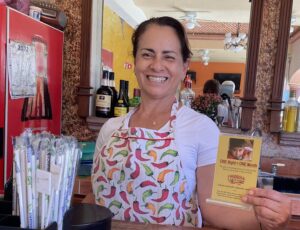
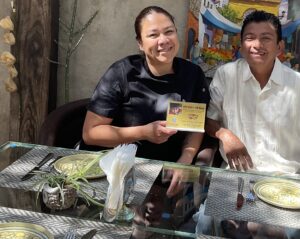
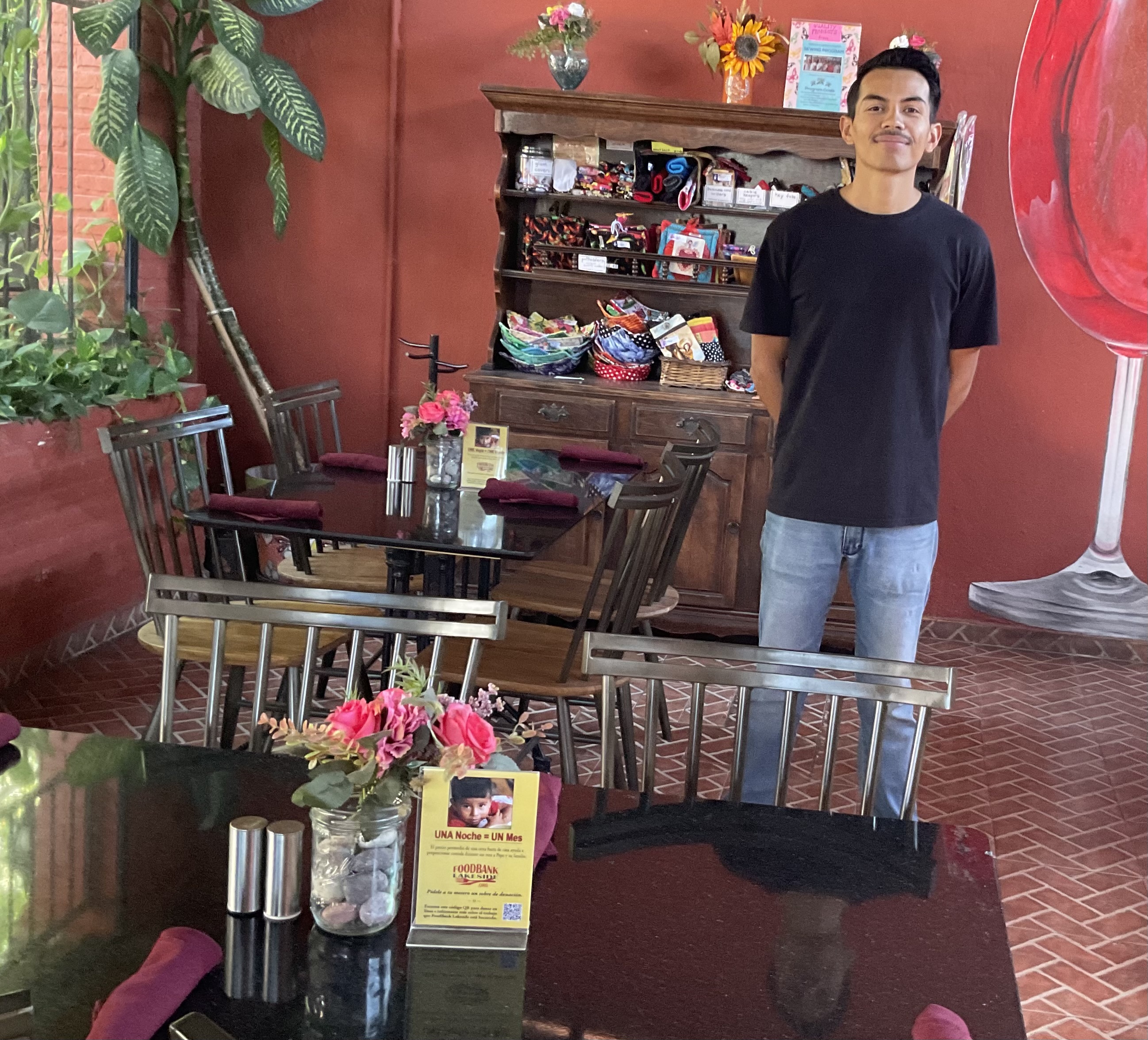

HELP US GROW THIS INITIATIVE: DINE & DONATE NEEDS VOLUNTEERS
.Are you a people-person who is looking for another way to support Foodbank Lakeside?
Currently there are eight active volunteers supporting the program.
These volunteers help recruit and sign up new restaurants and make monthly visits to collect donations, replenish restaurants with more envelopes, replace aging table-toppers and answer any questions that may arise.
Marlowe Wylson, who manages the Dine & Donate program, is actively seeking volunteers to expand the initiative to more restaurants throughout Lakeside. With an estimated 40 potential restaurant partners in the area, there is a great opportunity to grow this impactful program.
If you’re interested in helping to promote Dine & Donate, please reach out to Marlowe at mymarlowe@gmail.com.
The next time you and your friends plan on dining out, support our partners in the fight against hunger and make it a FoodBank Lakeside Dine & Donate restaurant. Please help us help others, and consider donating while you’re dining.


LCarne de res (beef dishes) in Mexican cuisine reflects a long history of cultural blending. Its roots trace back to pre-Hispanic traditions, Spanish colonization, and regional adaptation.
Before the Spanish arrived, indigenous peoples in Mesoamerica did not raise cattle. Their only protein sources were turkey, deer, rabbit, fish, insects, and beans. Cooking methods included slow simmering, roasting, and stewing. Additionally, the use of chiles, herbs, tomatoes, and squash, formed the culinary base that would later shape today’s beef dishes.

When the Spanish colonized Mexico in the early 1500s, they introduced cattle and other livestock and also lard. They also brought new cooking techniques as well such as braising and the use of meat-based broths. Because cattle thrived in Mexico’s landscapes, especially in the north and central regions, beef gradually became more available, though for centuries it was eaten mainly by landowners and in rural communities.
Over time, indigenous ingredients were combined with Spanish beef traditions, which then gave rise to simple, nourishing and delicious preparations of carne de res.
Basically, this was beef simmered with garlic, onions, chiles and herbs. They were cooked into caldo’s (broths), guisas (stews) or dry braises and served with beans, tortillas and rice. These dishes emphasized practicality and economy—using tougher cuts cooked slowly to become tender.
As beef became more common, regional styles emerged. Central Mexico became known for its beef stews in tomato or chili-based sauces. Northern Mexico favored grilled and roasted dishes influenced by the ranching culture and the Southern regions placed an emphasis on combining beef with indigenous spices and local chiles. Examples include caldo de res, carne en su jugo, carne guisada, and later carne asada traditions.
Carne de res dishes represent the mestizaje (cultural mixing) of Mexico, home-style cooking passed down through generations, and adaptability—each household and region has its own version. In short, Mexican carne de res is not one recipe but a culinary tradition born from history, land, and everyday life, blending Indigenous roots with Spanish influences into something distinctly Mexican.
FEBRUARY RECIPE – Caldo de Res (Mexican Beef Soup)
A rich beef broth base loaded with vegetables
Course: Main Course, Soup
Cuisine: Mexican
Keyword: caldo de res, Mexican beef soup, mexican recipe
Servings: 8 servings
Ingredients
10 cups water, divided
2½ lb. combined beef bone-in shanks or short ribs (that’s where flavor comes from) and a beef roast or pre-cut stewing beef
1 large onion quartered then cut again into chunks; reserve 4 tbsp minced onion for garnish
2 garlic cloves
3 bay leaves
1 tbsp salt
1 medium zucchini chopped
1 medium yellow squash or chayote peeled, seeded and chopped
2 small russet potatoes cubed
2 large carrots peeled and diced
2 roma tomatoes chopped
¼ large green cabbage chopped into 1” pieces
2 ears of corn cut crosswise into 2” slices
Handful of cilantro tied with string; 4 tablespoons chopped for garnish
4 oz tomato sauce or 4 tbsp tomato paste
Optional: sliced jalapeños
Instructions
-
Leave beef shanks or short ribs on bone and cut beef roast into 1 inch chunks.
-
Add 8 cups of water, onion, garlic cloves, bay leaf, salt, and beef to a large pot, making sure beef is fully submerged.
-
Bring to a boil over medium-high heat, then reduce heat to medium-low and simmer, using a ladle to skim any dark foam from surface as needed, 12–14 minutes.
-
Cover pot and cook, adjusting heat as needed to maintain a simmer, until beef is tender, 1–1½ hours.
-
Using tongs, remove beef shanks or short ribs, garlic and bay leaves from pot.
-
Cut the beef into chunks and add back in to pot with bones. Discard bay leaves and let garlic cool slightly.
-
Smash garlic into a paste with a spoon and add to the broth with the bunch of cilantro.
-
Add in the rest of the ingredients. If liquid level is low, add up to 2 cups water, 1 cup at a time.
-
Increase heat to medium and cover pot, leaving lid slightly open. Cook until carrots are tender, 20–30 minutes. Remove cilantro; discard. Skim fat from surface of soup. Stir in salt; taste and season with more salt if needed.
-
Ladle soup into bowls and top with finely chopped white onion, finely chopped cilantro, and sliced jalapeños.
•• Serve with lime wedges for squeezing over, rice, salsa verde, salsa roja and warm tortillas.